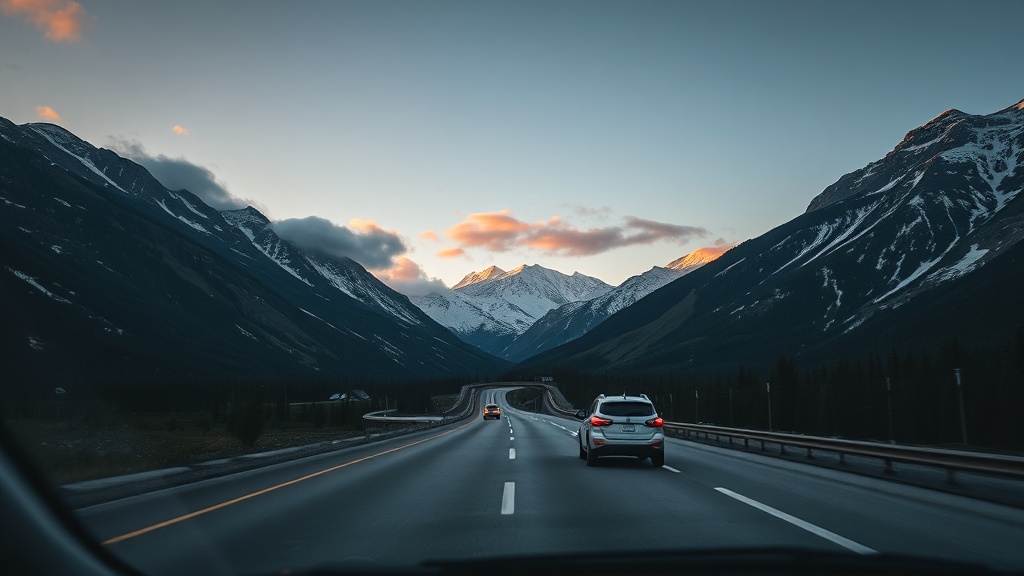
BC Mountain Pass Driving Isn't About Courage, It's About Timing

Quick Tip
Check DriveBC webcams, compare both sides of the pass, and time your crossing for daylight instead of trusting the vehicle badge.
The common misconception is that British Columbia mountain-pass driving is a vehicle problem: rent something tall, click AWD, and you are set. That is backwards. This covers how locals actually decide whether to cross a pass — by checking timing, tires, temperature swings, and live road data before the key turns — because a calm plan will save you faster than a bigger badge on the tailgate.
Do you need a big SUV to drive BC mountain passes?
No. You need legal tires, decent tread, working wipers, and the willingness to turn around. A front-wheel-drive sedan on proper winter or all-weather rubber is often a safer choice than a tall SUV on worn all-seasons. People fixate on clearance and brand names while ignoring the only part of the vehicle that actually touches the pavement. That is where pass driving is won or lost.
On designated routes in British Columbia, winter tires or chains are required from October 1 to April 30 on most routes, with some lower-risk stretches ending March 31. The province lays that out on its winter tire and chain route page, and the sign on the shoulder matters more than whatever a rental counter, hotel clerk, or overconfident cousin told you. If the sign says winter tires, "it felt fine leaving the city" is not a useful argument.
A few practical truths matter more than marketing copy:
- Tread depth beats bravado. If the tire is near the legal floor, wet snow and slush feel greasy in a hurry.
- AWD helps you get moving. It does not shorten braking distance on a glazed downhill corner.
- Weight can work against you. A heavier vehicle carries more momentum when the road tips down.
- Rental assumptions get people in trouble. Ask what tires are fitted, then check the sidewall yourself before you leave the lot.
M+S tires can meet the legal minimum on many routes, but the three-peak mountain snowflake symbol is the better call when the pass is cold, slushy, or stuck in that annoying freeze-thaw range. If you are driving a crossover with low tread and a lot of faith, you do not have a mountain-pass setup. You have a story you are hoping ends well.
A bigger vehicle can hide a bad decision for ten minutes. The first downhill curve is where the road gives its opinion.
When is the best time of day to cross a BC mountain pass?
Locals do not ask only, "Can I make it over?" We ask, "When will the road be least stupid?" That question matters more. On many BC passes, the safest window is not the moment you feel ready; it is the stretch after crews have been through, after daylight has improved contrast, and before evening cold snaps refreeze the mess.
In winter and shoulder season, first light through early afternoon is often the sanest window. By then, road crews have had time to treat trouble spots, you can actually see lane lines, and summit temperatures have usually climbed a bit from the overnight low. That last part matters. A valley sitting at 4 C can still feed you a summit hovering around 0 C, which is exactly where slush, spray, and black ice start playing games with people who checked only the departure forecast.
Late afternoon catches a lot of avoidable mistakes. The sun drops behind the mountains earlier than you expect, wet sections lose heat fast, and tired drivers start bargaining with themselves: just one more hour, just one more stretch, just get to Merritt, just get to Revelstoke. That kind of self-talk belongs in a warm kitchen, not on a grade with transport trucks around you.
If you have flexibility, do not leave the coast at dinner time and aim for a summit after dark just because the hotel rate looked good. Save your stubbornness for parking meters. On a pass, boring timing is smart timing.
| Departure Window | Why It Helps | What To Watch |
|---|---|---|
| Before dawn | Light traffic on some routes | Black ice, dark corners, fewer open services |
| Morning | Better visibility and fresher crews | Lingering overnight frost on bridges and shaded bends |
| Midday | Best contrast and slightly warmer pavement | Slush, spray, and heavy weekend volumes |
| Late afternoon to night | Sometimes quieter after rush periods | Fast refreeze, glare, fatigue, and reduced reaction time |
Which road reports should you check before leaving?
One glance at a weather app is not enough. Use DriveBC for incidents, closures, delays, chain-up notices, and webcams. Then compare that with Environment Canada weather alerts and forecasts. A pass drive is one of those times when two tabs open is not overthinking it; it is the minimum for an adult decision.
DriveBC tells you what the road is doing now. Weather forecasts tell you what the sky is likely to do next. You need both. I also check towns on both sides of the pass, not just the place I am leaving from. Hope and Merritt can tell very different stories on the same morning. So can Golden and Revelstoke. So can Cache Creek and Kamloops. If one side looks mild and the summit cam looks ugly, believe the summit cam.
This is the order that works:
- Check closures and event notices first. There is no point planning around a route that is already shut, backed up by a crash, or under control work.
- Open the summit webcam and at least one approach cam. A clean valley road can turn filthy fast as elevation climbs.
- Read the hourly forecast, not just the icon. Mixed precipitation around freezing is where the easy mistakes live.
- Look at temperatures on both sides of the pass. A two- or three-degree swing changes surface conditions more than most people think.
- Check again right before you leave. Conditions can change while you are filling the tank and buying coffee.
There is another small local habit worth stealing: when the data conflicts, trust the worst piece of evidence until you know why it looks worse. If the forecast says "light chance of showers" but the webcam shows a greasy lane with low visibility, the webcam wins. The road does not care that the app looked cheerful.
Also, do not confuse a route being open with a route being pleasant. Open can still mean slow, sloppy, and mentally expensive. If you are already tense before the climb starts, wait. The road will still be there in an hour.
What should you pack even for a short BC pass drive?
People treat a two-hour mountain drive like an urban errand. Then a crash, avalanche control, or spun-out truck closes the road and suddenly they are parked in sleet for three hours with half a phone charge and a hoodie. You do not need expedition gear for most BC pass trips, but you do need enough margin to stay warm, fed, and functional if traffic stops moving.
What is worth carrying in the car:
- A warm layer you would actually wear outside the vehicle
- Gloves and a dry hat
- Water and a few snacks that do not turn useless in the cold
- A phone cable and battery pack
- An ice scraper and decent washer fluid
- A flashlight or headlamp
- A small shovel if you are driving often in winter
- A blanket for long delays or kids in the back seat
- Any medication you would not want trapped in checked luggage or a bathroom cabinet
If you drive an EV, add more buffer than the dashboard estimate makes you want to. Cabin heat, slush, headwinds, and slow moving queues can cut range more than people expect, and mountain routes are not the place to discover that a charger is busy, offline, or awkwardly located behind six other tired drivers. A healthy charge margin buys you options; that matters when the weather turns weird.
Fuel drivers are not off the hook either. Fill up before the climb when it makes sense, especially on routes with long service gaps or limited late-night hours. It is a lot easier to laugh off a delay when the tank is full and the windshield is clean.
When should you cancel, wait, or take a different route?
This is the part locals get right more often than visitors: we do not treat backing off as failure. A pass drive can be legal, technically open, and still not worth the stress. If the summit temperature is hovering around freezing, precipitation is active, visibility looks poor, and your tires are merely "good enough," that is not a green light. That is the road asking whether you are paying attention.
Wait, reroute, or cancel when:
- The webcam looks worse than the forecast
- There is an active incident and traffic is already stacking up
- You would be crossing after dark and you are not familiar with the route
- You are tired, rushed, or trying to make up lost time
- Your tires technically qualify but do not inspire confidence
- You are carrying young kids, pets, or anyone who would struggle in a long cold delay
Sometimes the smarter choice is a longer valley route, a later departure, or an overnight stop you did not want to pay for. That is still cheaper than a tow, a body-shop bill, a wrecked weekend, or the kind of white-knuckle drive that leaves everyone useless when you arrive. Mountain passes punish optimism far faster than they punish caution.
If you want a simple rule, use this one: if the cam looks messy, the pavement temperature is flirting with freezing, and you are already building a speech about why it will probably be fine, wait. Make another coffee. Recheck the cams. Let the plows get another lap. British Columbia roads do not hand out extra points for commitment.